

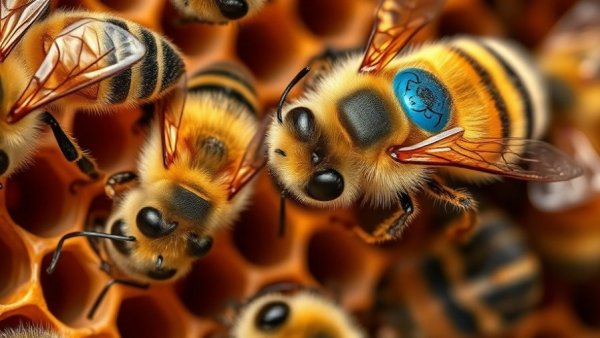
Unlocking the Secrets of Bee Behavior: The Hidden Neural Switch
In a groundbreaking study, researchers from Heinrich-Heine University Düsseldorf and partner institutions unveiled a neural switch in bees' brains that determines their workplace roles. Just like any well-functioning society, the success of a bee colony depends on the seamless cooperation of individual members undertaking specific tasks. But unlike human systems driven by explicit leadership, these insect communities operate efficiently without centralized management.
The Age-Dependent Job Roles of Worker Bees
As worker bees age, their roles within the hive evolve significantly. Beginning as caretakers for the queen and larvae, they gradually progress to building and defending the hive, before finally embarking on foraging excursions for nectar and pollen. This transition in labor is guided by intricate neural communication, the details of which have remained largely mysterious until now. The discovery contributes a vital piece to the puzzle of how complex social structures can function without central direction or hierarchy.
Gene Insights and Their Implications
A previously studied gene known as doublesex took center stage in this research. When researchers deactivated the doublesex gene in older bees, a fascinating phenomenon occurred: these bees resumed their queen-caring duties—usually the province of younger worker bees. This pivotal observation raises important questions about the genetic and neural underpinnings of behavior in these complex social organisms. Understanding the role of doublesex in the context of bee duties may shed light on other genes that influence social behaviors in other species, including humans.
The Experiment: Manipulating Neural Circuits for Insight
To probe deeper, a cutting-edge method was implemented where scientists selectively silenced specific neural circuits tied to the doublesex gene. This involved producing a suppressive protein designed to inhibit certain neurons within the bee's brain. Consequently, when these circuits were inhibited, older worker bees reverted to tasks typical of their younger counterparts: caring for the queen. This experiment not only illustrated the control that neural circuits have over behavior but also posed fascinating implications for the field of neurobiology.
Understanding Animal Behavior: Broader Implications
This revelation extends beyond entomology and shines a light on the broader context of animal behavior and social organization. By mapping how bees autonomously organize their tasks, we gain insights applicable in diverse fields ranging from artificial intelligence to understanding human social structures. If we can decode the methods that enable cooperation among bees, we might find parallels in human organizational behavior and efficiency. This alignment could lead to developing more sophisticated systems that enhance productivity and collaboration in workplaces.
Future Directions: The Tech and Biological Space
As this research progresses, the potential applications of these findings continue to grow. Advancements in technologies, such as genetic editing and neural imaging, are evolving rapidly. These tools not only help researchers grasp the cognitive nuances of bee behavior but may also provide inspiration for breakthroughs in fields like healthcare and biotechnology. For example, understanding the mechanisms of task allocation and specialization in bees can translate into better management strategies in hospitals or technology firms, where team dynamics mirror those of a bee colony.
The Role of Collaboration in Nature and Society
Furthermore, exploring the collaborative methods employed by bees could inform initiatives aimed at improving teamwork in various settings. As organizations worldwide face challenges related to task distribution and efficiency, the need for insights drawn from natural systems becomes increasingly important. Understanding the biological principles that guide bees as they work together could lead to innovative strategies that elevate human cooperation, especially within teams and communities.
Conclusion: Embracing the Interconnectedness of Life
The discovery of the hidden neural switches in bee brains underscores the complexity of nature’s designs. As these findings resonate through the scientific community, they serve as a reminder of the interconnectedness of all life forms and how even the smallest creatures can teach us invaluable lessons about cooperation and task division—echoing into both technological advancements and collaborative human endeavors. The lessons gleaned from these buzzing pollinators could inspire innovative solutions to pressing challenges within our communities.
By embracing these discoveries, we can explore further the incredible potential of collaboration at all levels, in nature and in human society. The next frontier lies in harnessing the knowledge obtained from bee research to create a more efficient, supportive, and interconnected world, where the principles of nature guide our technological and social advancements.













Write A Comment