

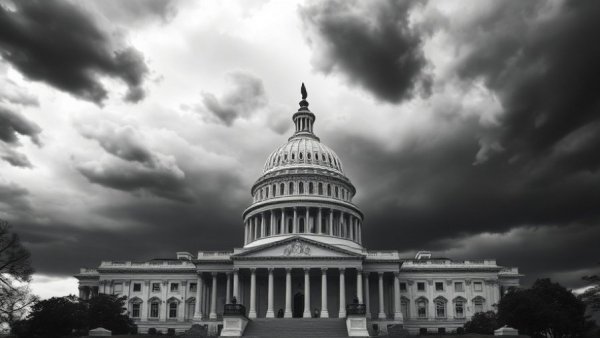
Invisible Threads: How Bipartisan Unity Shapes Policy
Despite the surface tumult within a divided federal government, an underlying consensus reigns on issues of surveillance, censorship, debt, and war. This compelling dynamic not only reflects the mechanics of governance but also reveals a troubling reality that both parties are willing participants in maintaining a narrative of conflict while uniting in some of the most critical aspects of American policy.
Historical Patterns: The Bipartisan Cargo Cult of Spending
The story of U.S. fiscal decisions is replete with bipartisan agreements that have overwhelmingly favored increased spending. Take the 2011 debt-ceiling crisis, which, despite the drama surrounding it, ultimately led to agreements that further loosened fiscal restraints over subsequent years. Current policies echo this established pattern; both parties leverage the complex dance of blame to justify continued spending without addressing the unsustainable fiscal trajectory revealed in the CBO’s alarming reports.
The Surveillance State: Justifying Spending Through Security
One of the most significant unifying factors is the expansion of the surveillance state, which has benefitted both parties. Initiatives like the Patriot Act serve as justifications for budgetary increases in an era where each party professes to fiercely protect citizens’ rights, all while bolstering their military budgets and surveillance programs. The business model built on surveillance guarantees expansive expenditures, thus creating a scenario where accountability becomes a mere façade.
Military Spending: A Bipartisan Priority Despite Rhetoric
Even as Trump campaigned on reducing military entanglements, the overwhelming bipartisan support for the defense budget makes clear that military spending remains sacrosanct. The 2026 National Defense Authorization Act, which grossly exceeded Trump’s requests, exemplifies how military priorities remain unchallenged, irrespective of party lines. This is clear evidence that underlying political divisions often disguise a robust alliance when it comes to funding the military-industrial complex.
The Future: Sustaining the Status Quo
The trajectory indicates that, regardless of who holds power in the executive or legislative branches, U.S. policy will likely continue along this path of debt-driven decision-making. As fiscal policies increasingly veer towards unsustainable practices while supporting the status quo, the American populace could face greater economic pressures linked to this bipartisan negligence. The cycle is maintained as both parties thrive within the chaos, further implying that they may collectively avoid substantive reform in favor of maintaining a façade of ideological conflict while aligning behind fortifying their interests.













Write A Comment