

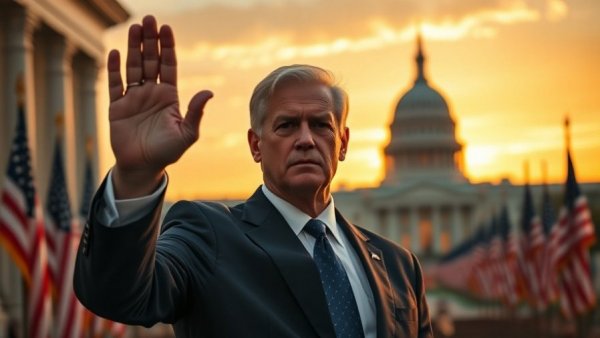
Crucial Shifts in U.S. Political Dynamics
The landscape of U.S. politics is undergoing significant transformation with the Democratic Party poised to take control of Congress in January. This shift presents an opportunity for a reevaluation of established policies, particularly concerning foreign relations in the Middle East. Hakeem Jeffries’ remarks about the need for change in Gaza and the West Bank resonate with a growing sentiment among progressive Democrats, who are urging a more balanced approach to U.S.-Israeli relations.
The Push for a Two-State Solution
Echoing long-standing positions within the party, Jeffries advocates for a negotiated two-state solution aimed at ensuring both Israeli security and Palestinian self-determination. These aspirations are not only an echo of past liberal agendas but also a response to the pressing need for a diplomatic breakthrough in a historically fraught conflict. With Democratic leaders like Jeffries in a position of authority, there is potential for a resurgence of focus on this critical issue.
Implications for U.S. Military Aid
Jeffries has highlighted the memorandum governing the $3.8 billion in annual U.S. military aid to Israel—an agreement set to expire in 2028—as a focal point for necessary changes. Calls to reexamine such funding reflect a shift in priorities, with increasing scrutiny over how U.S. assistance is utilized in a region that has seen escalating tensions. The outcomes of the recent midterm elections signal a demand from constituents for greater accountability and transparency in military support.
Divisions Within the Democratic Party
As the Democratic Party prepares for this new chapter, internal divisions have become increasingly evident. Candidates backed by the younger, more progressive factions of the party have made strides in recent elections, underscoring a generational shift in attitudes towards issues like foreign aid. Such divisions could lead to significant policy debates in Congress, highlighting the evolving perspectives on both Israel and Palestine among lawmakers.
Future Outlook: Opportunities and Challenges
The incoming Democratic majority presents a dual-edged sword. While there are opportunities for renewed debate and potential policy shifts, there is also the risk of deeper polarization within the party regarding consensus on foreign policy matters. As Jeffries and his colleagues prepare for the next session of Congress, their approach to Israel and Palestine will be indicative of broader changes in the political climate, which could redefine American involvement in the Middle East moving forward.













Write A Comment