

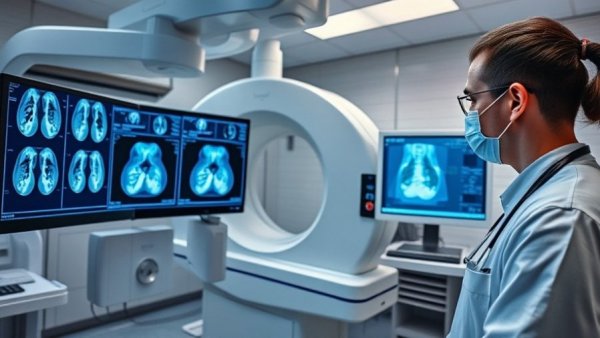
AI in Breast Imaging: A Quantum Leap in Diagnostic Technology
The partnership between MedCognetics and Innovative Health & Wellness signifies a substantial advancement in the realm of breast imaging. As healthcare providers increasingly adopt AI technologies, this collaboration aims to bolster diagnostic accuracy, streamline workflows, and ultimately enhance patient outcomes across Texas. By integrating cutting-edge AI solutions, they are taking significant steps toward making breast healthcare more proactive and effective.
Understanding the Impact of AI on Healthcare
Artificial Intelligence, particularly in medical imaging, automates the interpretation of complex imaging data. AI systems can analyze mammograms more swiftly and accurately than human specialists. This capacity not only saves time but also identifies potential anomalies that may be overlooked during manual reviews. The advancement of AI in breast imaging is especially crucial considering that early detection of breast cancer significantly increases treatment success rates. By harnessing powerful algorithms, medical professionals can obtain clearer insights into patient health.
The Rising Adoption of AI Across Healthcare Facilities
With the increasing complexity of diagnostic requirements and the volume of screenings, innovative partnerships are becoming essential in the healthcare landscape. Texas, as a health innovation hub, sets a prime example with its commitment to integrating advanced AI solutions. Providers like Innovative Health & Wellness are not just adopting technology but are also reshaping their operational frameworks to optimize AI usage. This integration is accompanied by ongoing training and support for staff to ensure they can effectively collaborate with AI tools, ultimately resulting in better patient care.
Potential Benefits for Patients and Providers
By implementing MedCognetics' AI technology, patients can expect swifter results and potentially earlier detection of breast concerns. For healthcare professionals, the partnership allows for a hybrid approach—combining human expertise with the analytical power of AI to improve overall diagnostic confidence. With AI handling more routine analyses, radiologists can devote more attention to complex cases that require deeper insight and human judgment. This, in turn, can lead to a more personalized approach to patient care, tailored to individual health profiles and histories.
Future Trends: What Lies Ahead in AI and Imaging?
The integration of AI into breast imaging services foreshadows a future where technology plays a more significant role in patient care. As these technologies evolve, we can expect even greater enhancements in predictive analytics, patient management systems, and personalized healthcare approaches. Furthermore, there is a growing potential for AI to assist not just in imaging but also in treatment planning and patient follow-up, creating a comprehensive cycle of care that enhances patient experiences.
Challenges to Consider in AI Implementation
While the benefits are clear, the journey to widespread adoption of AI in healthcare is not without hurdles. Critical factors such as data privacy, the need for regulatory compliance, and training of existing staff to work alongside AI systems must be acknowledged and addressed. Data security in healthcare is paramount, and organizations must ensure that the patient information utilized in AI systems is protected against breaches. Overcoming these challenges will be essential for the success of AI-assisted healthcare initiatives. Moreover, there is a vital need for continued dialogue among stakeholders—including technologists, healthcare providers, and regulators—to establish best practices that can facilitate smooth integration.
Conclusion: A Bright Future for AI-Assisted Healthcare
The collaboration between MedCognetics and Innovative Health & Wellness exemplifies the transformative potential of AI in healthcare. As they move forward, both organizations not only strive to enhance breast imaging processes but also lead a revolution in how medical diagnostics can benefit from artificial intelligence. This pivotal partnership may serve as a blueprint for other regions to adopt similar technologies in patient care. Moving forward, the use of AI in medical imaging will likely become the standard, not just an option, as the healthcare industry collectively works towards a future that prioritizes efficiency, accuracy, and enhanced patient experiences.













Write A Comment