

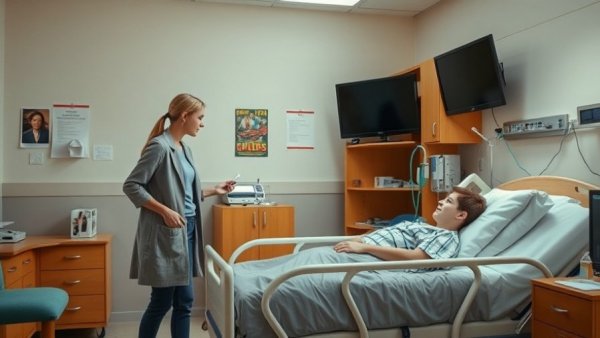
A Journey Through Pain and Resilience
In an era where gun violence and its impact on youth are front-page news, the story of Jaloni serves as both a personal and societal lens into the complex issues surrounding healthcare for vulnerable populations. At just 14 years old, Jaloni found himself navigating a healthcare labyrinth most cannot even fathom, living on the third floor of SSM Health Cardinal Glennon Children’s Hospital in St. Louis for over 475 days. His journey, marked by severe health challenges and social instability, underscores a stark reality: while hospitals are designed for healing, they are increasingly serving as temporary homes for children who lack safe environments to return to.
The Harsh Reality of Hospital Boarding
The term 'hospital boarding' describes a troubling phenomenon increasingly affecting children like Jaloni. It refers to the practice of admitting patients who no longer require acute medical care, often due to a lack of safe, appropriate discharge options. Research conducted in Minnesota highlighted this issue's staggering financial implications: in 2017, boarding costs for children with complex medical needs reached approximately $3,932 a day. In Missouri, the situation is dire; over the past five years, state expenditure has surpassed $64.7 million to house children in hospitals, a significant portion of these cases attributed to inadequate foster care availability.
The Psychological Toll of Extended Stays
While logistical and financial aspects of hospital boarding have garnered attention, it's crucial to consider the psychological ramifications that an extended hospital stay can have on a young mind. Jaloni experienced debilitating pain and fear during his time in the hospital, emotions compounded by the trauma of surviving a shooting. His story is a glaring example of how medical institutions become a nursery for emotional scars that can last a lifetime.
Is Healthcare Failing Our Most Vulnerable?
The conversation around healthcare for marginalized communities often highlights access to treatment, yet Jaloni's situation encapsulates a broader failure of the system to offer holistic support. According to Liz Sharpe-Taylor, spokesperson for SSM Health, when children like Jaloni remain hospitalized due to the lack of discharge options, the financial burden of uncompensated care ultimately falls on healthcare systems, which often lack the resources to sustain such operations. This crisis reveals how the U.S. healthcare infrastructure can falter when presented with challenges beyond typical medical needs, leaving patients adrift in a system that is both costly and inefficient.
Future Solutions: What Can Be Done?
To address hospital boarding, policymakers must revisit foster care systems, invest in transitional housing, and enhance mental health services for youth. Solutions should also involve community-driven initiatives designed to offer comprehensive support pathways for affected children. As interest groups and activists advocate for legislative changes, it’s imperative that society recognizes the multiple layers of trauma experienced by young gun violence survivors like Jaloni.
Empathy and Long-term Healing
From Jaloni's account, it’s evident that survivors need not just medical care but also emotional and community support to aid their healing processes. Transformative healthcare extends beyond the hospital doors; it encompasses a social responsibility that calls for empathy, understanding, and proactive measures. As Jaloni steps into adulthood, let us hope that systemic structures grow stronger to protect the most vulnerable among us, paving the way for long-term healing and resilience.
By amplifying these narratives and advocating for comprehensive changes, we can turn pain into purpose and ensure that stories like Jaloni's do not fade into obscurity but inspire actionable change.













Write A Comment